Water is the one input in farming that has no substitute. You can switch fertilisers, change seeds, try a different pest control method. But without water, the right amount, at the right time, delivered to the right place, nothing grows. And yet, for decades, the dominant method of delivering that water in India has been
Water is the one input in farming that has no substitute.
You can switch fertilisers, change seeds, try a different pest control method. But without water, the right amount, at the right time, delivered to the right place, nothing grows. And yet, for decades, the dominant method of delivering that water in India has been flood irrigation: open a channel, let water run across the field, and hope enough reaches the roots before it evaporates or runs off.
The result? India uses more water for agriculture than almost any country on earth, and still loses a significant portion of every crop cycle to water stress, either too much in one spot, or not enough in another.
A Drip Irrigation System changes this entirely. And when you pair it with smart automation, Moisture Sensors, Automatic Solenoid Valves, and GSM Pump Controllers, it becomes one of the most powerful tools available to any farmer or serious gardener in India today.
What Is a Drip Irrigation System?
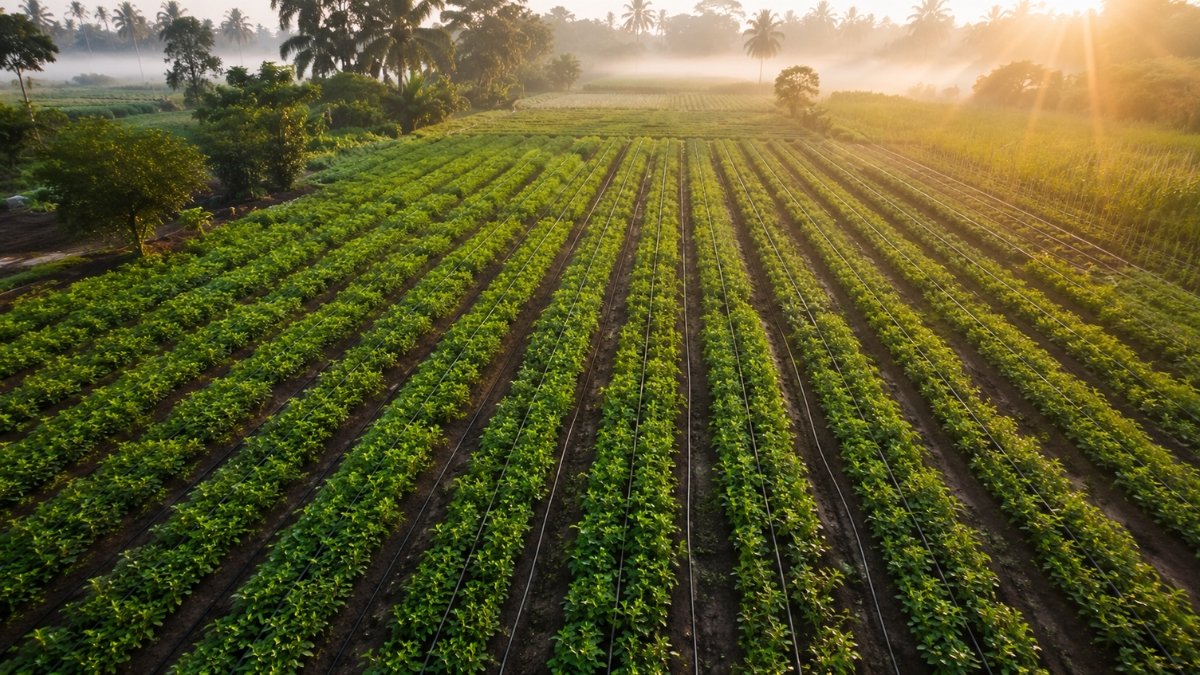
A Drip Irrigation System is a method of delivering water directly to the root zone of plants, slowly, precisely, and continuously, through a network of pipes, tubes, and emitters.
Instead of flooding an entire field or spraying water overhead, a Drip Irrigation System places water exactly where the plant needs it: at the root. Evaporation is minimised. Runoff is eliminated. The soil around the root stays consistently moist, not waterlogged, not dry, which is precisely the condition most crops and plants grow best in.
The core components of a Drip Irrigation System are straightforward:
- Main pipeline, carries water from the source (borewell, sump, or municipal supply) to the field
- Sub-mains and laterals distribute water across rows or zones
- Drip emitters or drippers, release water at a controlled rate directly at each plant
- Filter system, removes particles that would clog the emitters
- Control point, where flow is regulated, timed, and automated
The last component, the control point, is where the real intelligence of a modern Automatic Irrigation System lives.
The Problem with Manual Irrigation, Even Drip
A basic Drip Irrigation System without automation still requires someone to open and close valves, monitor soil conditions, and judge when watering is needed. In practice, this means:
- Crops get watered on a fixed schedule regardless of actual soil moisture
- A farmer with 10 acres has to manage multiple zones manually
- Watering continues even after rain, wasting water and risking root rot
- Remote fields go unwatered when access is difficult or labour is unavailable
The solution isn’t a different irrigation method. It’s automation layered onto the Drip Irrigation System already in place.
How Automation Makes Drip Irrigation Truly Smart
Moisture Sensor, Water Only When the Soil Actually Needs It
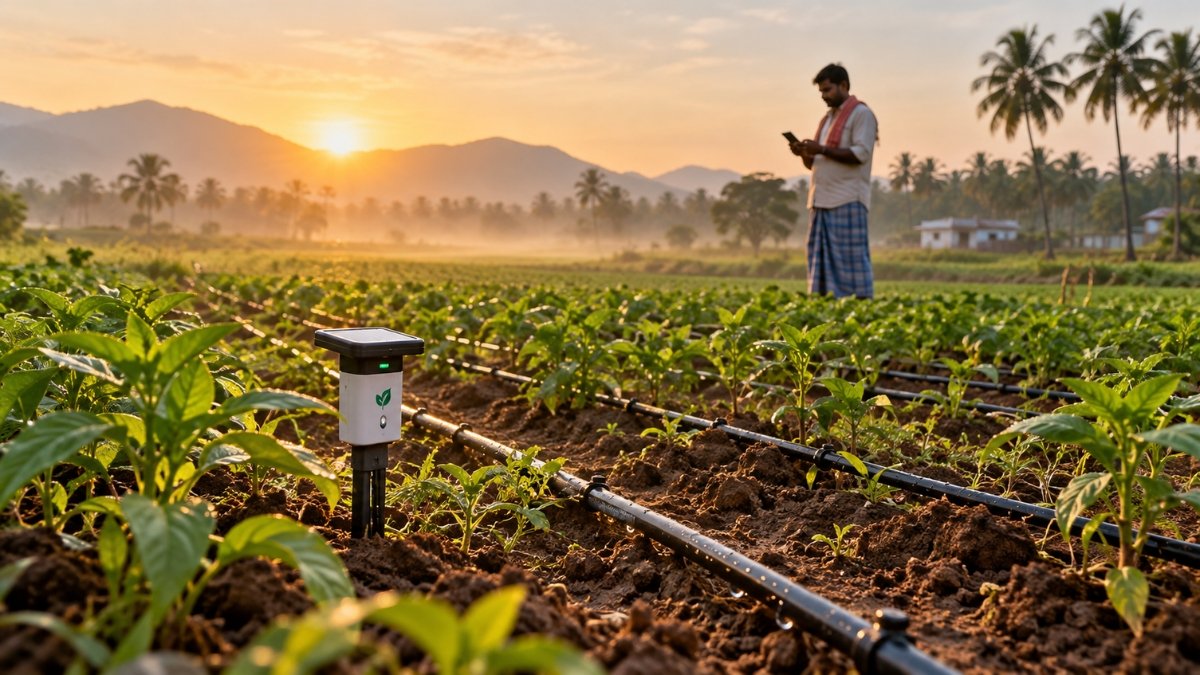
A Moisture Sensor placed in the root zone of crops measures the actual water content of the soil in real time. When moisture drops below a threshold, set based on the crop type and growth stage, the irrigation system triggers automatically. When moisture is adequate, it stays off.
This sounds simple. The impact is significant.
Without a Moisture Sensor, irrigation runs on time, every morning at 6 AM, regardless of whether last night’s rain already saturated the soil. With a Moisture Sensor, irrigation runs on need. Water is applied only when the crop requires it, in the quantity required, and stops automatically when the threshold is met.
The result is less water used, lower electricity bills from running the pump less, and healthier crops that aren’t stressed by either over- or under-watering.
For home gardens, a Moisture Sensor is equally valuable. Potted plants, kitchen gardens, and landscaped beds all benefit from moisture-based control, especially during monsoon, when manual watering schedules become completely redundant.
Automatic Solenoid Valve, Zone by Zone Control Without Manual Intervention
A field or garden is rarely uniform. Different crops, different soil types, different sun exposure, different growth stages- each zone has different water requirements at different times.
An Automatic Solenoid Valve solves this. Installed at each irrigation zone, an Automatic Solenoid Valve opens and closes on command from the central controller, allowing each zone to be irrigated independently, on its own schedule and duration, without anyone physically opening or closing anything.
For a farmer with multiple crops, say, tomatoes in one section, groundnut in another, and a border of banana, each zone can run on its own profile. The tomatoes get more frequent, shorter watering cycles. The banana gets longer, deeper watering less often. All of it happens automatically, simultaneously, with no manual switching.
An Automatic Solenoid Valve also responds to Moisture Sensor readings. If the sensor in zone 3 reads adequate moisture, the valve for zone 3 stays closed, even if zone 1 and zone 2 are actively irrigating. True zone-level intelligence.
Automatic Timer Switch, Schedule-Based Irrigation for Predictable Crops
Not every application needs sensor-based control. Many farmers know their crop’s water requirements well; a fixed schedule based on crop type, season, and growth stage works reliably.
An Automatic Timer Switch brings this schedule into the irrigation controller. Morning watering at 5:30 AM, evening at 5:00 PM, duration 45 minutes, set once and it runs automatically every day without any manual action. When the crop moves to a different growth stage, update the schedule. That’s it.
For large farms running irrigation at night, when evaporation is lowest and electricity tariffs are often lower, an Automatic Timer Switch makes unattended overnight operation reliable and consistent.
GSM Pump Controller, Remote Control from Anywhere
This is where Agricultural Automation becomes genuinely transformative for Indian farmers.
A GSM Pump Controller allows you to start, stop, and monitor your irrigation pump from anywhere in India using a simple SMS or phone call. No smartphone app required. No internet connection needed. Any mobile phone, any network, any time.
For a farmer managing land 20 km from home, or a landowner who travels frequently, or a manager overseeing multiple farm sites, the GSM Pump Controller means the irrigation system is always reachable. Send an SMS, and the pump starts. Send another, and it stops. Get an SMS alert if the pump trips, if the borewell runs dry, or if power fails at the site.
Combined with Automatic Solenoid Valves and Moisture Sensors, a GSM Pump Controller completes a fully remote, fully automated Automatic Irrigation System, one that manages itself, alerts you when something needs attention, and runs your irrigation schedule without requiring physical presence.
Water Pump Controller, The Engine of the Automation System
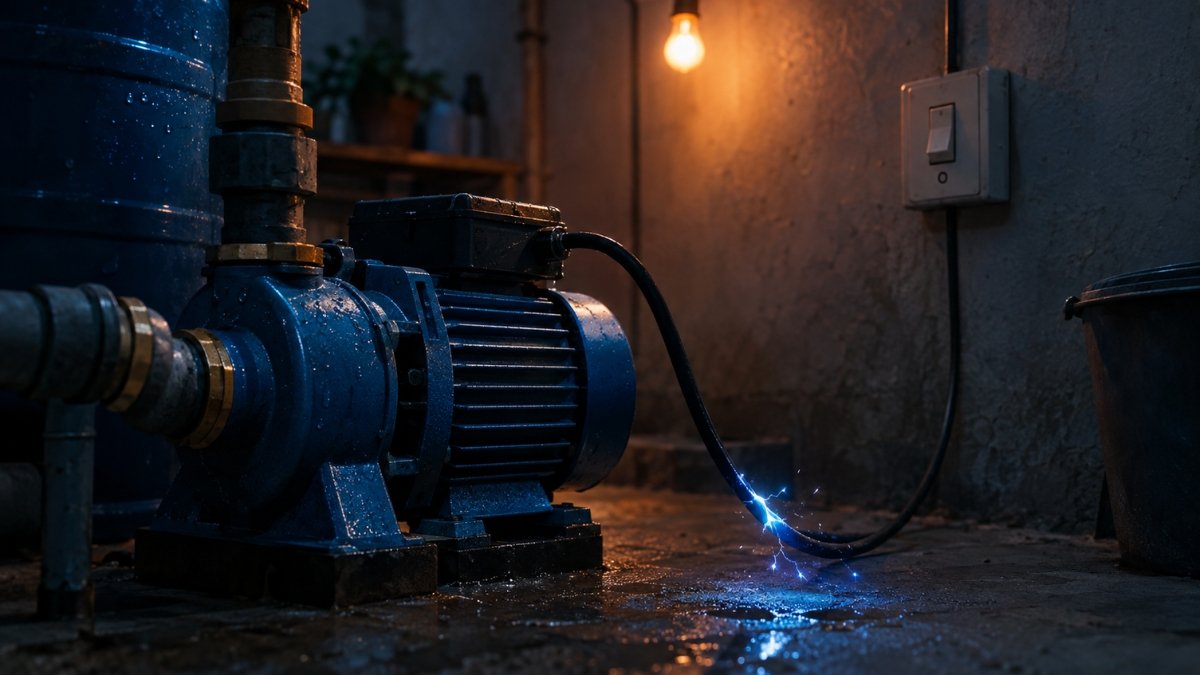
The Water Pump Controller sits at the centre of any serious Automatic Pump Control System. It manages the pump motor, starting it when irrigation is needed, stopping it when the cycle is complete or the source runs low, and protecting it from the faults that end motor life prematurely: Dry Run Protection, voltage faults, overload.
For Drip Irrigation Systems specifically, the Water Pump Controller ensures the pump delivers consistent pressure to the drip lines. Pressure variation in drip systems causes inconsistent flow from emitters; some plants get too much, others too little. A well-set Water Pump Controller maintains the operating pressure the system was designed for, ensuring every emitter across every zone delivers exactly what it should.
Drip Irrigation + Smart Automation: What a Complete Setup Looks Like
For a medium-sized farm, say, 5 to 10 acres, a fully automated Drip Irrigation System would typically include:
| Component | Function |
| Drip Irrigation System | Delivers water to root zone across all crop rows |
| Moisture Sensor | Monitors soil moisture, triggers irrigation on demand |
| Automatic Solenoid Valve | Controls water flow to each zone independently |
| Automatic Timer Switch | Schedules fixed irrigation cycles |
| Water Pump Controller | Manages pump operation and protects motor |
| Dry Run Protection | Cuts the pump if the borewell runs dry |
| GSM Pump Controller | Enables remote monitoring and control via mobile |
| DOL Motor Starter | Starts 3-phase pump motor safely |
Each component does a specific job. Together, they create an Automatic Irrigation System that runs autonomously, conserving water, protecting equipment, and delivering consistent results across every crop cycle.
The Real-World Benefits for Indian Farmers and Gardeners
Water savings of 30–50% compared to flood irrigation, the most cited advantage of Drip Irrigation Systems, and consistently validated in Indian agricultural trials across Tamil Nadu, Maharashtra, Karnataka, and Andhra Pradesh.
Lower electricity bills: from running the pump less and only when the Moisture Sensor calls for it, not on fixed hours regardless of actual need.
Higher crop yields: from consistent moisture at the root zone, reduced plant stress, and elimination of both overwatering and underwatering.
Labour reduction: an automated Drip Irrigation System with Automatic Solenoid Valves and a GSM Pump Controller requires far less manual intervention than any manual irrigation method.
Motor protection: Dry Run Protection and a proper Water Pump Controller protect the borewell pump from the conditions that cause the most common and expensive pump failures.
Better crop quality: consistent moisture delivery produces more uniform fruit and vegetable size, which matters for market pricing.
Is Drip Irrigation Only for Large Farms?
No. And this is one of the most common misconceptions about Drip Irrigation Systems in India.
A kitchen garden of 50 square feet benefits from drip. A terrace garden of 10 pots benefits from drip with a timer and Moisture Sensor. A small farm of 1–2 acres gains significantly from even a basic drip setup with an Automatic Solenoid Valve and timer.
The technology scales from a single home garden bed to thousands of acres. The principles are identical at every scale: deliver water to the root, control when and how much, automate as much of the decision-making as the application warrants.
Government Support for Drip Irrigation in India
The Indian government’s Pradhan Mantri Krishi Sinchayee Yojana (PMKSY) and associated schemes provide subsidies of up to 55–90% for Drip Irrigation System installation for small and marginal farmers across most states. Tamil Nadu, Maharashtra, Gujarat, Karnataka, and Rajasthan all have active subsidy programs that significantly reduce the upfront cost.
For any farmer considering a Drip Irrigation System, checking the applicable state-level subsidy before purchasing equipment is an important first step. The installed cost after subsidy is often a fraction of the market price.
Final Thought
India’s water challenge in agriculture isn’t going to be solved by finding more water. The groundwater table is falling in most agricultural regions. Rainfall patterns are becoming less predictable. Municipal and canal water allocations are tightening.
The only sustainable path is using the water that’s available more intelligently.
A Drip Irrigation System, especially one automated with Moisture Sensors, Automatic Solenoid Valves, a GSM Pump Controller, and proper Dry Run Protection, is what that intelligence looks like in practice. It uses less water, protects the equipment drawing that water, and delivers better results than any manual irrigation method ever could.
The technology is available. The subsidies exist. The payback period, in water savings and yield improvement alone, is typically within one to two seasons.
The only question is when to start.