I’ll be honest, most people don’t think about safety when they install a home EV charger. The usual mindset is simple: “I have a charger, I have a plug point… that’s enough.” That’s exactly how I thought about it, too, until I started noticing how unpredictable our power supply can be. One minute everything’s fine,
I’ll be honest, most people don’t think about safety when they install a home EV charger.
The usual mindset is simple:
“I have a charger, I have a plug point… that’s enough.”
That’s exactly how I thought about it, too, until I started noticing how unpredictable our power supply can be. One minute everything’s fine, the next minute lights flicker, voltage dips, or there’s a sudden surge. For regular appliances, we ignore it. For an electric vehicle? That’s a different story.
Because charging an EV isn’t like charging your phone, it’s a heavy, continuous load, and if your electrical setup isn’t protected properly, you’re quietly taking a risk every single day.
The Part Nobody Talks About
Here’s what doesn’t get enough attention: your EV is probably the most expensive electronic device in your house.
And yet, many people plug it into a system that’s already handling ACs, washing machines, and everything else, without any specialised protection.
In India, especially, a few things are pretty common:
- Sudden voltage fluctuations, especially in the evenings
- Unexpected power surges during outages or restorations
- Occasional earthing issues in older buildings
- Rare but dangerous neutral failures
Individually, these might seem like small electrical issues. But during EV charging, they can cause real damage, not always instantly, but slowly over time.
That’s the tricky part. You won’t notice it until something goes wrong.
Why a Regular MCB Isn’t Enough
A lot of people assume, “I already have an MCB, so I’m safe.”
But an MCB is basic protection. It trips when there’s an overload or a short circuit. That’s it.
It doesn’t:
- Monitor voltage stability
- Detect leakage issues early
- Protect against subtle but harmful fluctuations
And EVs are sensitive. Their batteries and internal systems rely on stable, clean power. Even small irregularities, if repeated, can affect performance or reduce lifespan.
This Is Where a Dedicated EV Protector Comes In
Think of an EV protector like a bodyguard for your charging setup. It’s not just reacting when something goes wrong, it’s actively watching, preventing, and controlling power issues before they become serious.
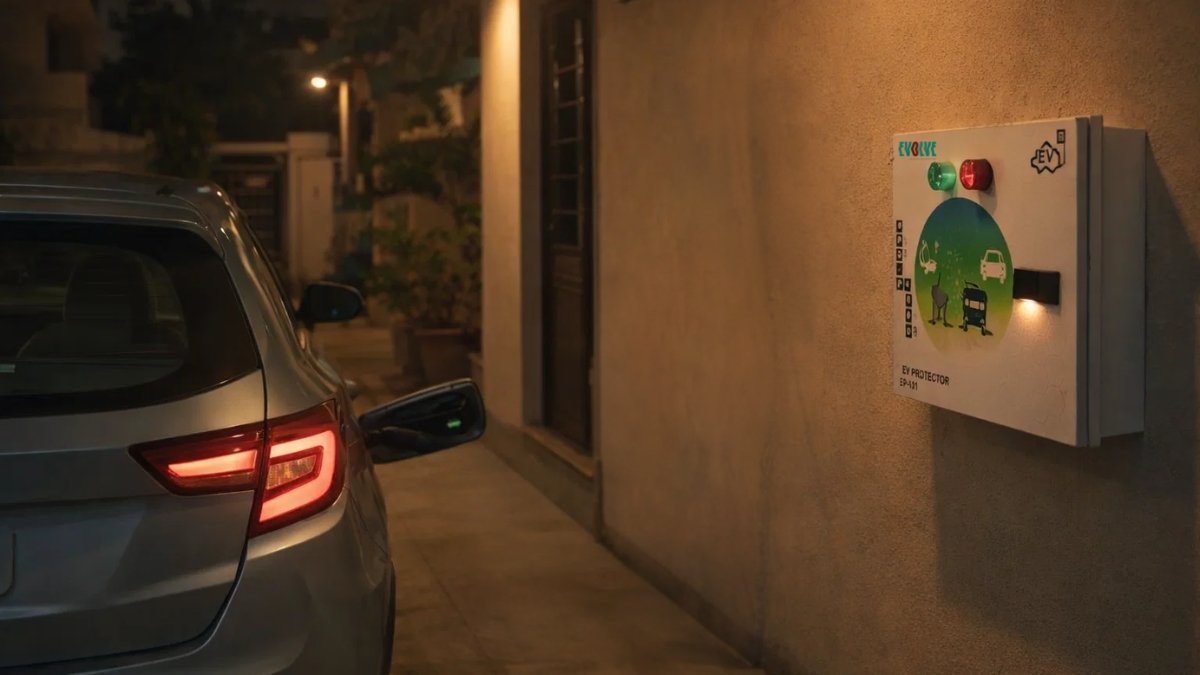
Something like the Evolve EP 101 Series EV Protector is built specifically for this job. Not general use, not “one-size-fits-all”, it’s designed keeping EV charging in mind.
And honestly, that difference shows.
What It Actually Does (In Real Life Terms)
Instead of throwing technical terms at you, let me simplify what a good EV protector actually handles:
It manages unstable voltage
If the power suddenly spikes or drops beyond safe limits, it steps in before your EV is affected.
It catches leakage issues early
Even small leakage currents, which you may not notice, can be risky. A proper protector detects and reacts instantly.
It protects against neutral problems
This is one of those hidden issues that can seriously damage electronics. A dedicated EV protector is designed to handle it.
It reduces accident risks
This isn’t just about your car, it’s about avoiding shocks, overheating, or worse.
In short, it’s doing all the silent work in the background while you just plug in and walk away.
The “Peace of Mind” Factor Is Real
I didn’t think this would matter much at first, but it does.
There’s a big difference between:
- Plugging in your car and hoping everything is fine
- Plugging it in and knowing it’s protected
Especially when charging overnight or when you’re not around, that confidence makes a difference.
You’re not second-guessing power cuts, voltage issues, or “what if something goes wrong.”
It’s Not Just About Today
EVs are only going to increase from here. Today it might be one car. Tomorrow, maybe two. Apartments are already starting to install shared charging points.
Which means:
- Higher load on electrical systems
- More dependency on stable power
- Greater need for reliable protection
A solution like the Evolve EP 101 isn’t just solving a current problem; it’s preparing your setup for what’s coming next.
So… Is It Really Necessary?
If I’m being practical, not dramatic, here’s the answer:
If you charge your EV occasionally, maybe you’ll get away without it for a while.
But if you’re charging regularly at home (which most people do), then not having proper protection is a bit like skipping insurance on something valuable. You might be fine… until you’re not.
Final Thought
Owning an EV is a smart move. It saves money, reduces emissions, and honestly, it just feels like the future.
But safe charging? That’s the part that completes the whole picture.
A dedicated solution like the Evolve EP 101 Series EV Protector isn’t about adding complexity; it’s about removing worry.
Because at the end of the day, the goal isn’t just to charge your car.
It’s to plug in, walk away, and not think twice about it.