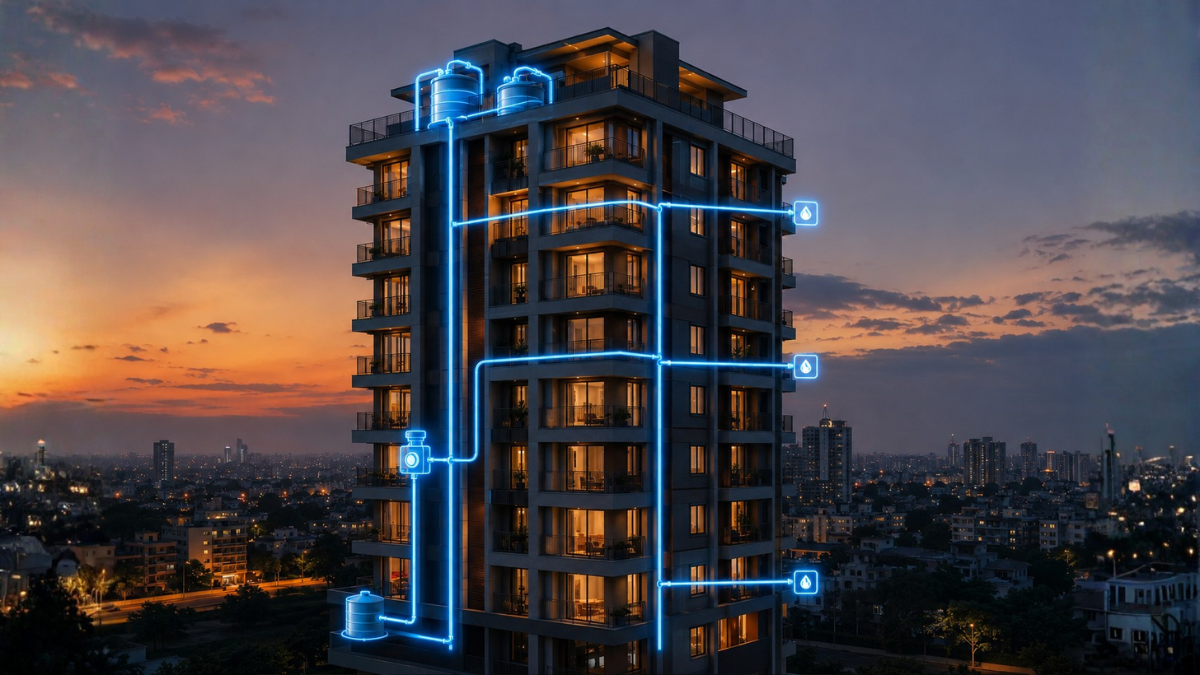
Something has quietly changed inside Indian homes. Rooftop solar panels are now a common sight in Chennai, Pune, Hyderabad, and Coimbatore. In the parking area below, a two-wheeler or car is tethered to a wall charger. Inside, a home UPS sits in the corner, keeping the router and laptop alive through power cuts. All of
Something has quietly changed inside Indian homes. Rooftop solar panels are now a common sight in Chennai, Pune, Hyderabad, and Coimbatore. In the parking area below, a two-wheeler or car is tethered to a wall charger. Inside, a home UPS sits in the corner, keeping the router and laptop alive through power cuts.
All of this is real progress. Homeowners are generating their own power, charging their own vehicles, and building independence from an unreliable grid.
But here’s what nobody mentions in the solar salesman’s pitch or the EV showroom brochure: all of this new equipment changes the electrical environment inside your home, and not always in ways that are kind to your appliances.
The Assumption That’s Costing People Money
When most people install solar panels, a home UPS, or an EV charging point, they assume the job is done. Power in, power out, appliances run.
That assumption misses something important.
Every time your solar inverter switches between grid and solar, which happens constantly through the day, there’s a transition. Every UPS switchover during a power cut is a jolt. Every time a high-draw EV charger kicks in on the same circuit as your AC and refrigerator, there’s a voltage dip and recovery. These events create the kind of electrical disturbances, voltage spikes, transient surges, and momentary over-voltage that quietly damage sensitive electronics over time.
The damage rarely announces itself. It looks like an AC compressor that started struggling after two years instead of eight. A refrigerator that trips more often. A TV whose remote control response became sluggish. A washing machine is throwing error codes that nobody can explain. You call the service engineer, pay the repair bill, and the real cause, your home’s electrical environment, goes unaddressed.
What Solar and UPS Actually Do to Your Power Quality
Solar inverters convert DC from your panels into AC for home use by switching power on and off thousands of times per second, a process called pulse-width modulation. This introduces harmonics and transients into the supply. Combined with an already fluctuating Indian grid, the cumulative effect on sensitive electronics is real. Inverter ACs, LED televisions, variable-speed washing machines, and computers with switching power supplies all carry components that are sensitive to this kind of electrical noise.
There’s also the backfeed effect. When your solar system generates more than you consume, it pushes power back to the grid. That transition, from drawing to supplying, creates brief but sharp voltage events on your circuits.
The UPS switchover moment carries a similar risk. That fraction-of-a-second gap between grid and battery, and back again, is when compressor-based appliances are most vulnerable. Compressors need time for refrigerant pressure to equalise before the motor restarts. When forced to restart immediately after a power interruption, the motor draws far more current than it’s rated for. Repeated over months and years, this shortens compressor life significantly, and most homeowners never connect the dots.
EV Chargers Add Another Layer
A two-wheeler charger draws up to 1.5 kW at full load. A four-wheeler home charger pulls 3.3 kW or more, and it hits full draw immediately, not gradually. When this kicks in on a circuit already running an AC and a refrigerator, the voltage dips. In older homes or dense residential layouts where the grid transformer is already loaded, these dips are more pronounced, and their effect on connected appliances is more damaging over time.
What Protection Actually Looks Like
The good news is that addressing this isn’t complicated. It just requires choosing the right solution for the right situation.
For individual high-value appliances, a refrigerator, a television, a computer, and a plug-in protection device is the clean answer. The Evolve AP 105 sits between the socket and your appliance, monitors voltage continuously, and cuts power the moment it detects an unsafe condition. When the voltage returns to a safe level, it doesn’t immediately restore power. The built-in time-delay restart waits for conditions to stabilise first, protecting compressors from the restart stress that causes most of the long-term damage.
Customers have described exactly this in practice. One user in Chennai noted that during office voltage spikes, every other system cycled off and on, but his, connected through the AP 105, waited for the voltage to fully stabilise before powering back on.
For homes where you want circuit-level coverage, particularly where solar and EV charging loads share a distribution board with your main appliances, a panel-mounted device like the Evolve AP 205 is the right answer. It installs on a DIN rail in your electrical panel, protects everything downstream, and is rated for EV charging points up to 16 amps and 3.7 kW. One device covers the entire circuit.
The distinction is simple: the AP 105 protects specific appliances you care most about. The AP 205 protects everything on a circuit and is built to handle the higher loads that come with solar and EV setups.
Power Has Changed. Protection Should Too.
Standard MCBs protect against short circuits and severe overloads, not sustained voltage fluctuations, transient spikes, or overvoltage events, which are exactly what solar inverters, UPS switchovers, and EV charger surges create. Appliance protection fills that gap.
The cost comparison is simple. A plug-in protector costs less than a single AC service call. A panel-level device costs less than a compressor replacement. And unlike a warranty, appliance protection prevents the damage rather than compensating for it after the fact.
If your home has solar, a UPS, or an EV charger, start with your highest-value appliances. Protect the refrigerator and primary AC first. If your solar and EV loads share a circuit with your main appliances, move to panel-level protection. Either way, make sure a time-delay restart is part of the solution.
India’s energy transition is happening in homes, not just in policy documents. Progress brings complexity, and the appliances inside modern homes are more sensitive than anything that came before. Getting the protection right isn’t an afterthought; it’s the step that completes the upgrade.