I didn’t really care about voltage or power issues… until one day my TV just stopped working. No warning. No drama. It just refused to turn on after a power cut. At first, I thought it was a minor issue. Maybe a loose wire or something. But when the technician came in, he said something
I didn’t really care about voltage or power issues… until one day my TV just stopped working.
No warning. No drama. It just refused to turn on after a power cut.
At first, I thought it was a minor issue. Maybe a loose wire or something. But when the technician came in, he said something that stuck with me, “Voltage fluctuation, sir. Happens all the time.”
That’s when I realized this isn’t some rare problem. It’s actually happening in most homes, especially in areas where power cuts and fluctuations are common.
And honestly, that’s how I got into understanding Power Protection, not from a manual or guide, but from experience.
The Thing About Power Surges (No One Really Talks About)
We all notice power cuts. Lights go off, fans stop, obvious.
But what we don’t notice are these tiny spikes in voltage. They happen in seconds. Sometimes, when power comes back. Sometimes, when a heavy appliance kicks in.
And those small spikes? They slowly damage your electronics.
It’s not always instant. That’s what makes it tricky.
Your charger stops working sooner than expected. Your fridge starts acting weird after a few months. Your router randomly dies one day.
You don’t connect it to voltage… but that’s usually the reason.
I Used to Think a Surge Protector Was Just an Extension Box
I’ll be honest, I had seen a Surge Protector before, but I never took it seriously.
To me, it was just a fancy extension board.
But it’s actually doing something important in the background. When voltage suddenly spikes, it blocks or redirects that extra current instead of letting it hit your device.
Think of it like a shock absorber.
Now I use a power surge protector for my TV, Wi-Fi router, and laptop setup. Not because I’m being extra careful… but because I’ve already learned my lesson once.
And yeah, I wish I had used it earlier.
The Bigger Problem Was My Fridge
After the TV issue, I thought I was sorted.
Then a few months later, my fridge started making strange noises. Cooling wasn’t consistent. Sometimes it worked fine, sometimes not.
That’s when another technician asked me, “Do you have a Voltage protector?”
I didn’t.
Apparently, appliances like refrigerators and ACs are much more sensitive than we think. They don’t just need protection from spikes; they need stable voltage all the time.
That’s where a home voltage protector comes in.
What a Voltage Protector Actually Does (In Simple Words)
No technical jargon here.
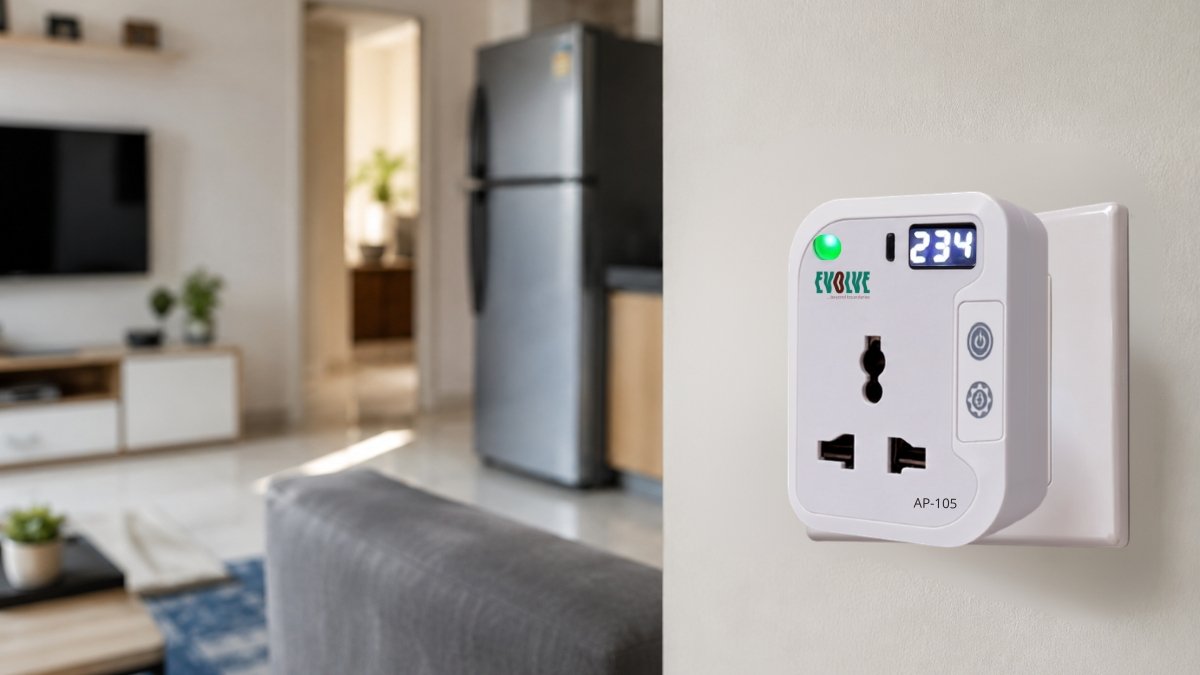
A Voltage protector basically watches your power supply 24/7. If the voltage goes too high or too low, it cuts the connection.
That’s it.
It doesn’t try to fix the voltage. It just makes sure your appliance doesn’t get damaged.
And honestly, that’s more than enough.
Because most damage doesn’t happen during normal usage, it happens during those unstable moments right after power comes back.
One Small Change That Made a Big Difference
After that fridge incident, I installed a home voltage protector.
Nothing fancy. Just a good-quality one.
And I started noticing something interesting: every time power came back after a cut, there was a small delay before my fridge turned on.
That delay? That’s the protector doing its job.
Earlier, I never even realized how unstable the power supply was. Now I could literally see it in action.
If You’re Wondering What You Actually Need
Let me make it simple, based on what I learned (the hard way):
- For small electronics → get a Surge Protector or power surge protector
- For big appliances → definitely use a Voltage protector
- For peace of mind → don’t skip a home voltage protector for fridge or AC
You don’t have to overdo it. Just cover the important stuff first.
A Few Things I Wish Someone Told Me Earlier
Looking back, there are a few mistakes I made:
- I ignored the problem until something broke
- I bought cheap accessories without checking the quality
- I assumed “nothing will happen”
And that last one is the most dangerous.
Because power issues don’t give warnings.
Simple Habits That Actually Help
Nothing complicated here. Just things I follow now:
- I don’t plug everything into one board
- I unplug during heavy thunderstorms (when I can)
- I check the wiring if something feels off
- And most importantly, I don’t ignore small signs anymore
These aren’t big changes. But they make a difference.
Final Thoughts (From Someone Who Learned Late)
If your area has frequent power cuts or voltage fluctuations, don’t wait for something to go wrong.
I did. And I ended up spending more on repairs than I would have on protection.
A basic Power Protection setup isn’t expensive. But it saves you from that annoying moment when something suddenly stops working… and you don’t even know why.
So yeah, if you’re thinking about it, just do it.
Because once something gets damaged, there’s no “undo” button.