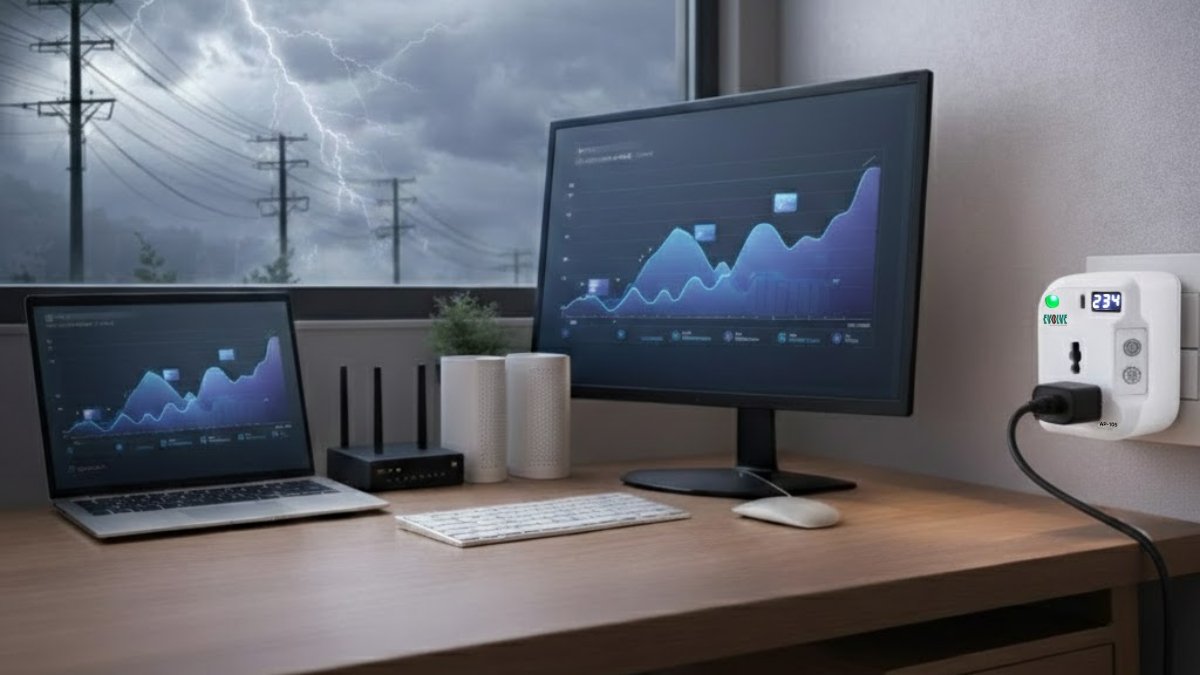
You buy a good laptop. A reliable Wi-Fi router. Maybe even a mesh system because work and streaming both depend on it. Everything works fine until one evening the power flickers, the router refuses to turn on, or the laptop charger suddenly smells burnt. Most homes don’t connect the dots immediately. The appliance didn’t fall.
You buy a good laptop. A reliable Wi-Fi router. Maybe even a mesh system because work and streaming both depend on it. Everything works fine until one evening the power flickers, the router refuses to turn on, or the laptop charger suddenly smells burnt.
Most homes don’t connect the dots immediately. The appliance didn’t fall. No water damage. It just stopped working.
That’s where questions around the smart plug start coming up. Does it actually protect devices? Or is it just another app-controlled switch?
Let’s break this down without marketing noise or technical overload.
Why This Problem Matters More Than We Admit
In many Indian homes, the voltage isn’t stable. It fluctuates quietly throughout the day, especially in apartments, older buildings, or areas with frequent load changes.
Laptops, routers, set-top boxes, and smart TVs are always plugged in. Even when switched off, their adapters stay live.
Over time, these small fluctuations chip away at internal components. One spike finishes the job.
This is why people replace chargers so often. Or routers die “for no clear reason.”
The damage is gradual. And expensive.
What Happens If You Ignore Power Protection?
Ignoring power protection doesn’t cause instant failure every time. That’s what makes it dangerous.
Here’s what usually happens instead:
- Laptop chargers heat up more than usual
- Routers randomly restart or lose range
- Adapters fail long before their expected life
- Devices become sensitive; one small spike knocks them out
A basic extension board won’t help here. Neither will a regular smart plug, and that’s an important distinction.
What a Smart Plug Actually Does (And Doesn’t)
A typical smart plug is designed for control, not protection.
What it usually offers:
- Remote on/off via app
- Scheduling and timers
- Energy monitoring (in some models)
What it usually does not offer:
- Real surge suppression
- High/low voltage cutoff
- Spike response fast enough for electronics
So if you plug a laptop or router into a basic smart plug, you gain convenience, but not safety.
This is where confusion starts.
Where Power Protection Comes In
To protect sensitive electronics, you need more than connectivity. You need electrical intelligence.
That’s the role of a Power Protection Plug or Surge Protector Plug.
A good power surge protector actively monitors incoming voltage. When it detects something unsafe, it reacts faster than the appliance ever could.
Key protection features include:
- Spike absorption during sudden surges
- Automatic cutoff during high or low voltage
- Safe reconnection once the voltage stabilises
This is what prevents silent damage.
Smart + Protection: The Missing Link
Now here’s the part most buyers don’t realise.
A smart plug can protect devices if it’s built as a protection-first device, not just a controller.
When smart control is combined with:
- Surge suppression
- Voltage cut-off logic
- Proper component rating
…it becomes something closer to a Voltage protector or home voltage protector, not just a switch.
That’s the category that actually protects laptops and routers.
How Evolve Approaches This Problem
At Evolve, the focus has always been protection first, smart features second.
Instead of asking “Can I turn this off from my phone?”, the better question is:
“Will this save my device when the voltage goes bad at 2 am?”
Evolve’s protection plugs are designed to function as:
- A Surge Protector Plug for sudden spikes
- A power surge protector for an unstable supply
- A home voltage protector that cuts power before damage happens
Smart control is layered on top only where it adds real value, not risk.
This matters because routers and laptops don’t need frequent toggling. They need stable power.
Real-World Use Cases (Where Protection Actually Helps)
Consider these everyday situations:
- Work-from-home setup
A router reboot during a voltage fluctuation can corrupt firmware. A proper Voltage protector prevents that cut. - Gaming or high-performance laptops
Sudden surges stress charging circuits. A Power Protection Plug absorbs the hit instead. - Homes with inverters or generators
Switching sources often causes micro-surges. This is exactly what a power surge protector is meant to handle.
These aren’t edge cases. They’re common.
Key Benefits for You
Using the right kind of protection plug gives you:
- Longer life for chargers, routers, and adapters
- Fewer unexplained failures
- Reduced repair and replacement costs
- Peace of mind during storms or power cuts
And if it includes smart features, you also get visibility, without compromising safety.
Trust, Safety, and Reliability
Good protection devices don’t rely on apps to save electronics. They work independently, even if Wi-Fi is down or the app isn’t open.
That’s a critical safety point many overlook.
Evolve designs its protection products to respond in milliseconds, because voltage spikes don’t wait for notifications.
That reliability is what matters when expensive gadgets are on the line.
So, Do Smart Plugs Really Protect Laptops and Routers?
The honest answer:
- Basic smart plugs? No. They offer convenience, not protection.
- Smart plugs with built-in surge and voltage protection? Yes, if designed correctly.
If your goal is to genuinely protect electronics, look beyond the word “smart.”
Look for real protection capabilities: Power Protection Plug, Surge Protector Plug, and home voltage protector features.
A Simple Next Step
Take a quick look at what your laptop and router are plugged into right now.
If it’s just a regular extension or a basic smart plug, you might already have your answer.
Protection doesn’t need to be complicated. It just needs to be the right kind.